Texas plans its water supply for the worst drought it has ever recorded, not the weather it expects in an average year. The Texas Water Development Board calls that benchmark the drought of record, and the dry stretch of the 1950s still sets the statewide bar. Building the plumbing of a state around its driest documented years is a deliberately conservative way to think, and it produces a sobering arithmetic once the population line keeps climbing.
Demand rises slowly, supply falls faster
The board adopts a new State Water Plan every five years, assembled from sixteen regional planning groups, and the 2022 edition lays the pressure out plainly. Texas is projected to grow about 73 percent between 2020 and 2070, from 29.7 million people to 51.5 million, with roughly half of that increase landing in the Dallas and Fort Worth region and the Houston region alone. Water demand does not rise nearly as fast. The plan projects total demand up about 9 percent over the same fifty years, from 17.7 million to 19.2 million acre-feet a year, because more efficient irrigation and plumbing offset much of the population gain.
The harder number sits on the other side of the ledger. Existing supplies, meaning the water the state can already count on delivering in a drought with today's permits and infrastructure, are projected to fall about 18 percent, from 16.8 million to 13.8 million acre-feet a year. Groundwater carries most of that decline, dropping an estimated 32 percent as aquifers like the Ogallala are drawn down faster than they refill. A growing state is therefore asking more of a shrinking base.
What the gap looks like in a dry year
Put demand and supply on the same chart and they cross. The 2022 plan estimates that under drought-of-record conditions, water user groups would face a shortfall of about 3.1 million acre-feet a year now, widening to 6.9 million acre-feet a year by 2070 if nothing new is built. The board's blunt framing is that without the recommended strategies, roughly one-quarter of the state's population in 2070 would have less than half the municipal water it needs during such a drought. That is not a forecast of what will happen. It is a description of the hole the plan exists to fill.
Closing it is expensive. The plan recommends more than 2,400 water management strategy projects, from new reservoirs and pipelines to conservation and reuse, at an estimated capital cost near 80 billion dollars in 2018 dollars. Conservation alone accounts for close to 29 percent of the new supply the plan counts on by 2070, a quiet reminder that the cheapest acre-foot is often the one a city never uses. The same growth math drives the state's wider approach to drought and resilience, where surface reservoirs and groundwater are managed as one stressed system.
The pipes between the plan and the tap
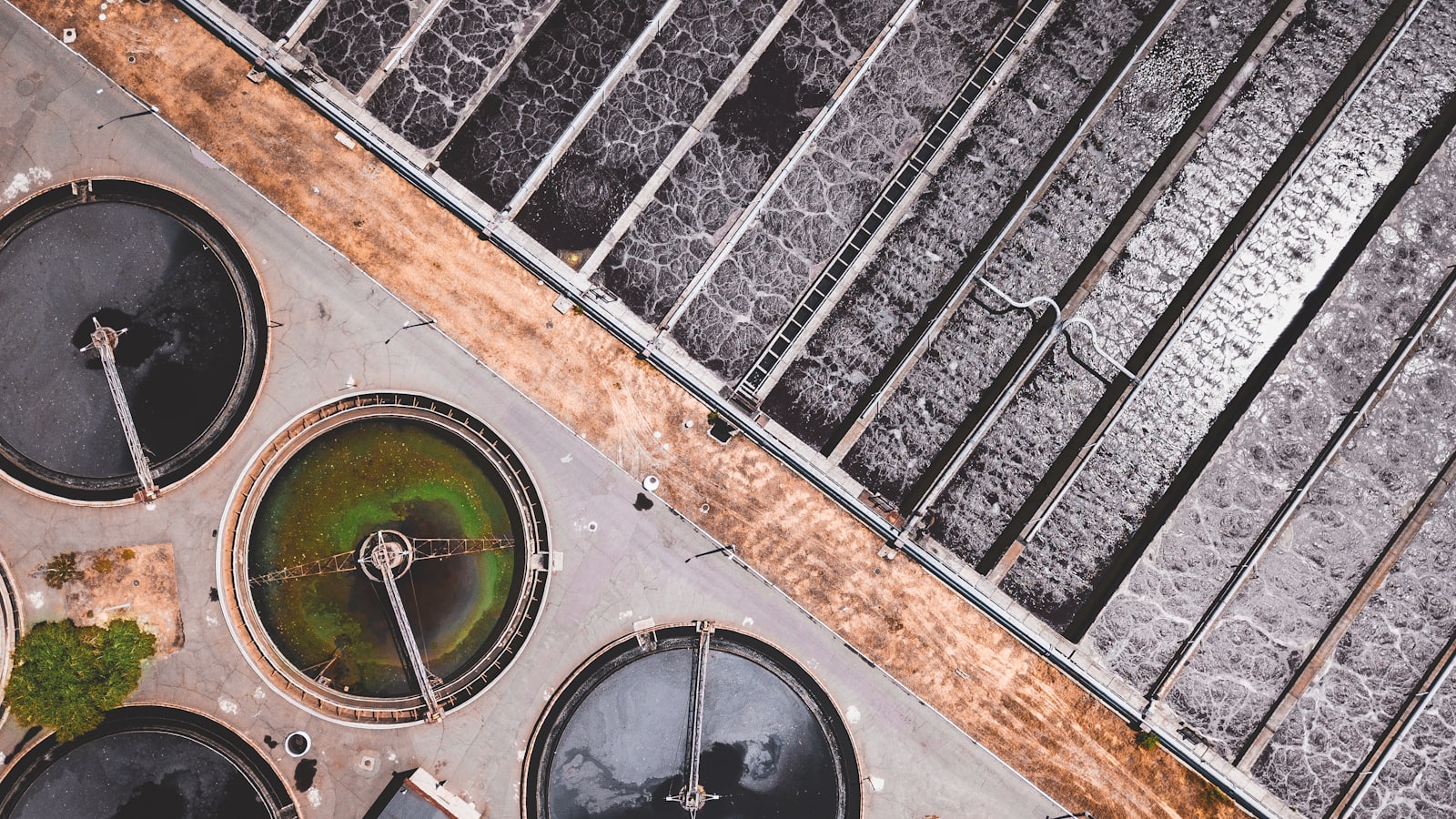
A state water plan is about raw supply. Whether that water reaches a household safely is a separate problem, and it belongs to the Texas Commission on Environmental Quality. TCEQ regulates the state's public water systems under federal drinking water rules, setting the standards a utility must meet and issuing the boil-water notices residents see when a system loses pressure or fails a test. The agency oversees thousands of these systems, from big-city utilities to tiny rural districts serving a few hundred connections, and the small ones are where age and thin budgets bite hardest.
Old pipe is the quiet tax on all of it. Water treated at real cost and then lost through a cracked main never reaches a customer or a meter, and utilities report those losses to the Water Development Board through required annual water loss audits. The board treats reducing that loss as a supply strategy in its own right rather than a rounding error, because a gallon saved from a leak is a gallon that need not be found in a new reservoir far away.
The map is not evenly stressed
Statewide totals hide how differently the pressure lands. The plan's sixteen regions do not share one shortage. The Panhandle and the Llano Estacado lean on the depleting Ogallala for irrigation, the fast-growing metro regions face municipal shortfalls driven by sheer headcount, and parts of the Gulf Coast manage subsidence from decades of pumping. A strategy that fits the Dallas and Fort Worth region does little for Far West Texas, which is exactly why the planning is done from the bottom up, region by region, before it is summed into a state total. Reuse illustrates the point: recycled water already makes up close to 4 percent of statewide supply, and the plan expects it to grow, but its usefulness depends on having a city large enough to generate the wastewater in the first place.
Why growth changes the engineering
Population does not only raise demand. It changes where the demand sits. Half the state's projected growth concentrates in two metro regions, which means the supply problem is partly a distribution problem, moving water toward the Dallas, Fort Worth, and Houston areas that the same statewide growth snapshot shows pulling ahead of everywhere else. New reservoirs sit far from the taps that need them, and the pipelines to connect them are among the costliest lines in the plan.
None of this is unique to water. The state's roads, its bridge network, and its utilities all face the same underlying pressure, a fast-growing population leaning on systems sized for a smaller Texas. What sets water apart is the hard floor beneath it. A road can be widened later; an aquifer that has been overdrawn does not refill on a human schedule, which is why the water plan reads less like a wish list and more like a bill coming due.
The useful way to read the 2022 plan is not as a prediction that the taps will run dry. It is a standing account of the distance between what Texas can reliably supply in a bad drought and what a state approaching 51 million people will ask for, updated every five years so the number cannot be quietly forgotten. The infrastructure desk follows that distance because it is the clearest single measure of whether the state is keeping its physical promises ahead of its growth.