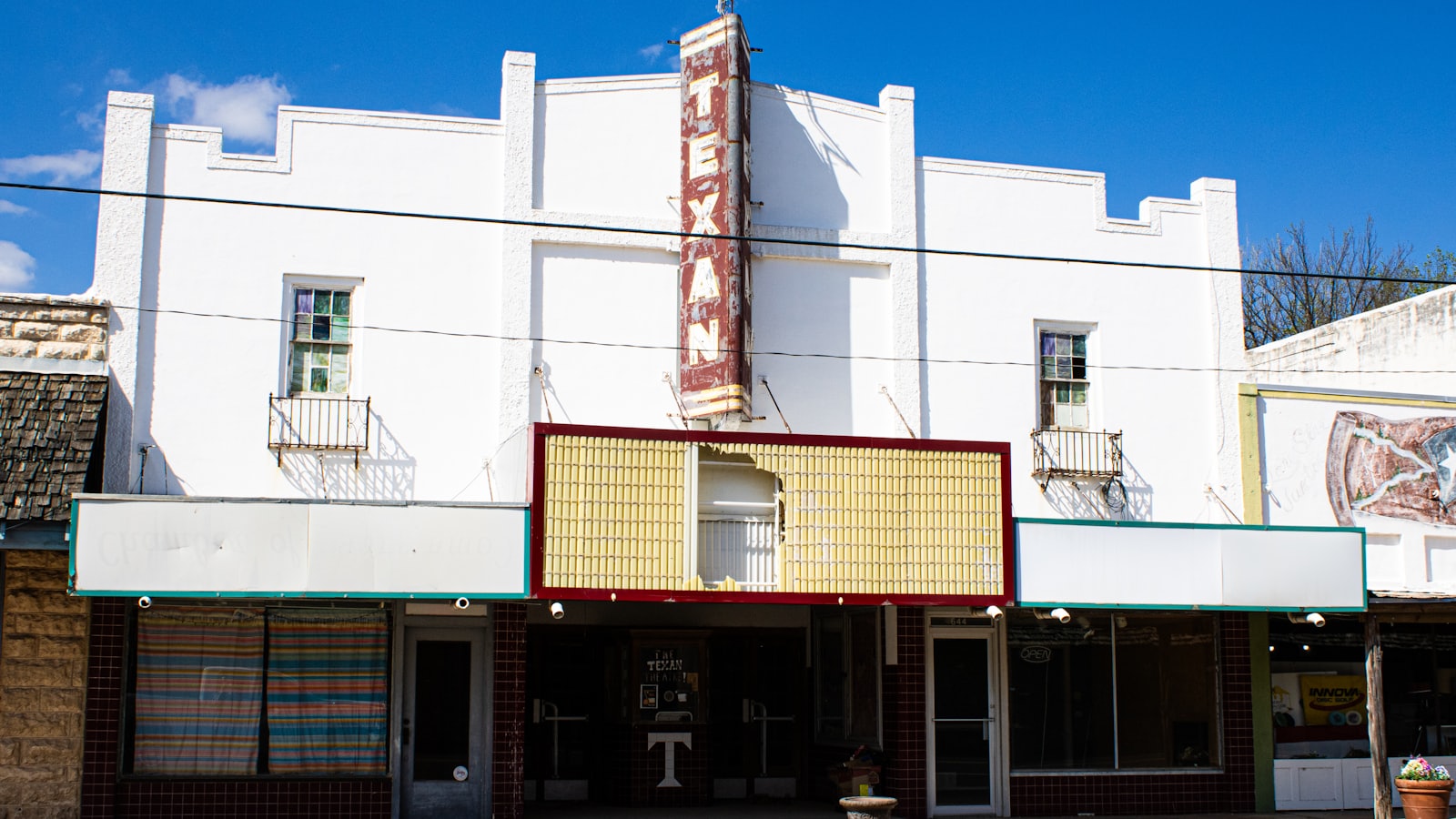
Drive an hour out of almost any Texas metro and the ground tells the story before any dataset does. Subdivisions and distribution centers give way to pasture, a county seat, a grain elevator, and then a long stretch of nothing until the next town. Both ends of that drive are Texas, and the state's central balancing act is keeping the crowded end growing without letting the empty end hollow out.
The scale of the growth is not in dispute. The U.S. Census Bureau's Vintage 2024 estimates put Texas past 31 million residents and credit it with adding more people than any other state, most of that concentrated in the metropolitan triangle bounded roughly by Dallas and Fort Worth, Houston, San Antonio, and Austin. The Texas Demographic Center has documented the same pattern from the other side: a handful of large metropolitan counties absorb the bulk of new residents while many rural counties grow slowly or lose population outright.
Two population curves bending in opposite directions
That split is the root of nearly every tension in this section. When people and money concentrate in a few counties, the services follow: hospitals, universities, transit, employers, broadband. A rural county on the losing side of the curve faces the reverse. Fewer residents mean a thinner tax base, and a thinner tax base makes it harder to keep the school, the clinic, and the water system that made the place livable to begin with. The gap does not just persist, it tends to widen on its own.
None of this reduces to a single average. As our look at how Texas differs from region to region lays out, the Comptroller treats the state as twelve distinct economies, and a booming suburb north of Austin and a shrinking county in the Panhandle answer very different questions even though they share a legislature and a state budget.
Land and water do not scale like a city
Urban expansion in Texas mostly means converting rural land at the edges, and that land was rarely idle. It grew crops, ran cattle, or held the aquifer recharge that a downstream city depends on. The Texas Comptroller's economic reporting has long identified agriculture and energy as anchors of the rural economy, which means every acre absorbed by rooftops is an acre subtracted from the base that keeps small towns solvent.
Water is the sharpest version of the conflict, because a growing metro and a working farm draw on the same finite supply. The strain that our reporting on Texas water systems and aging utilities describes is not evenly shared. A large city can fund a reservoir or a pipeline that a rural water district of a few hundred connections has no way to pay for. Growth adds demand quickly and adds supply slowly, and rural systems are usually the last in line.
The services that decide whether a town stays a town
A community holds its people when the basics are within reach: a school worth enrolling in, work that pays, and care when someone gets sick. Remove one and the others wobble. The clearest case is medicine, which is why we treat healthcare access across rural Texas as its own subject. When a rural hospital closes, the loss is not only medical. It is often one of the county's largest employers gone, and one more reason for a young family to move toward the metro instead of away from it.
Schools carry a similar weight. A consolidated district that buses children across two counties can keep a diploma within reach, but the campus it closed was frequently the social center of the town it left behind. These are the quiet mechanics of whether a place grows, holds, or fades.
Growth that reaches the ground, or does not
It is tempting to read a record statewide population or output figure as proof that the balance is working. It often is not, for the same reason our essay on what economic growth means at the community level gives: a number that climbs statewide can still leave whole counties behind. Texas has room, resources, and momentum that most states would envy. The open question is whether the parts of the map that are not booming get to share in any of it, or simply supply the land, water, and workers that the booming parts consume.
The Communities desk follows that question without pretending it has a tidy answer. Fast growth is not a problem to be solved and rural decline is not a fate to be accepted. They are two pressures the same state has to hold at once, and the reporting worth doing lives in the places where the tradeoff is actually being made.