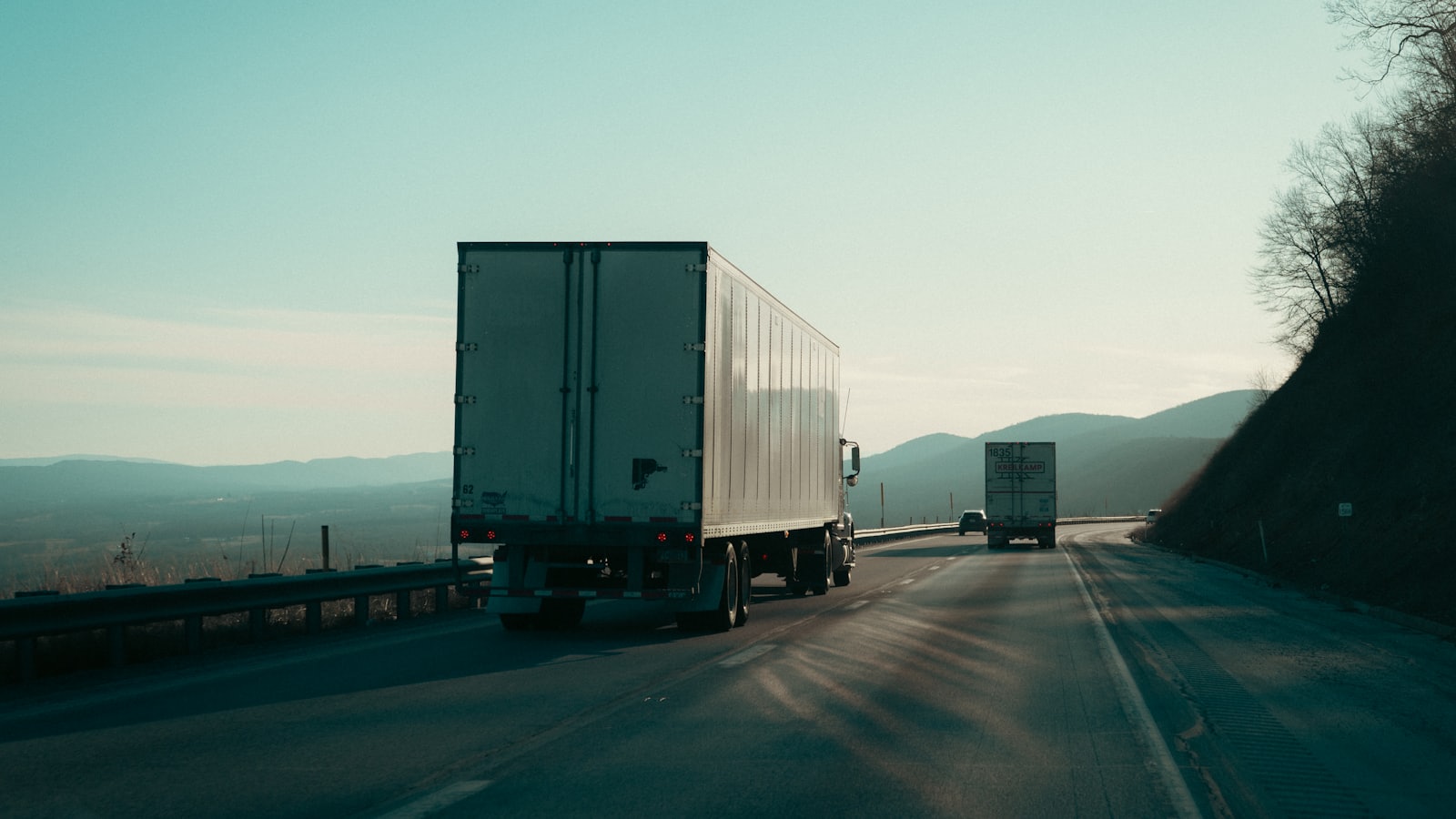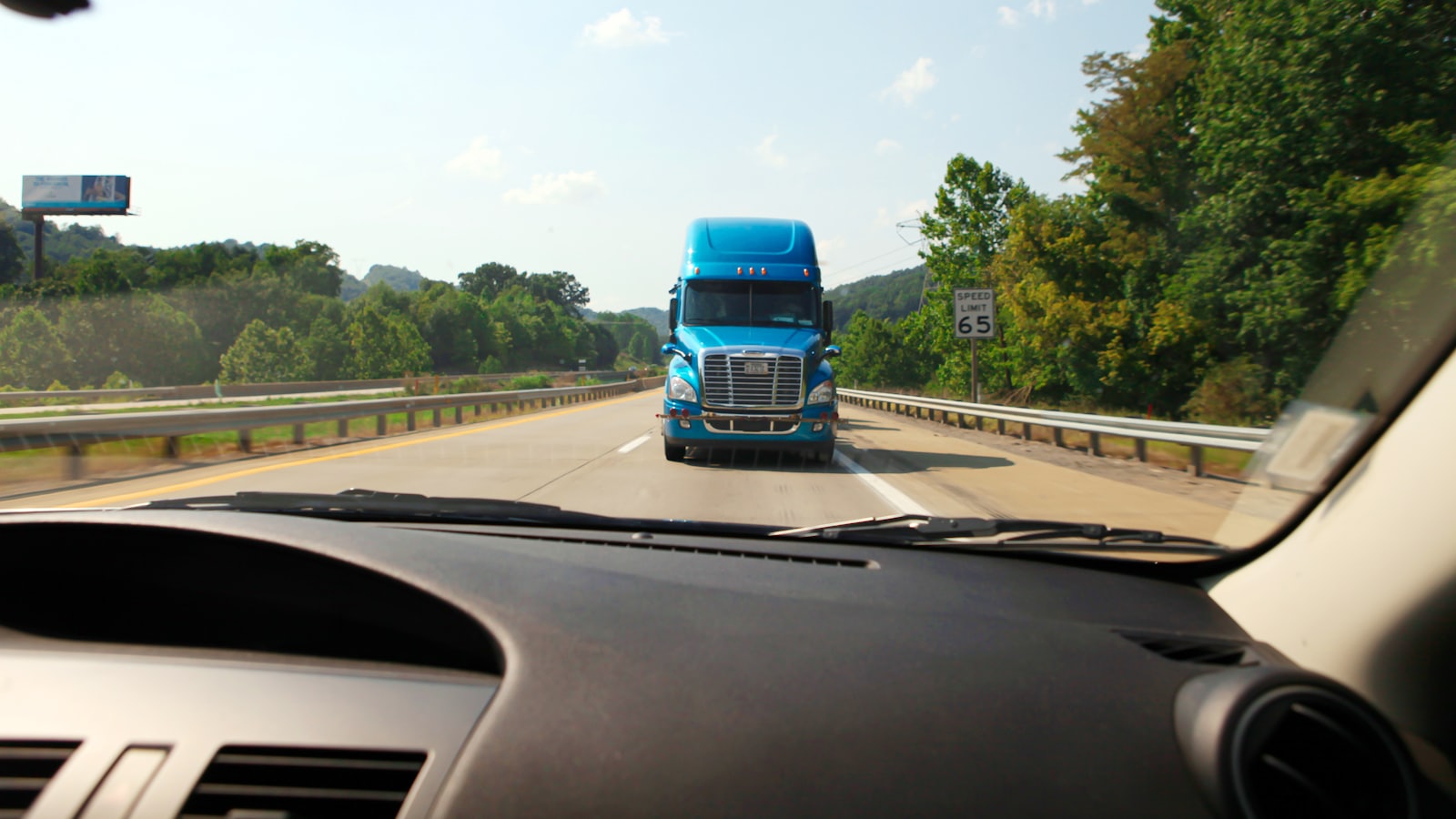
A loaded tractor-trailer can weigh dozens of times what the sedan beside it weighs, and that single fact organizes the entire apparatus of commercial-vehicle regulation on Texas highways. When physics that lopsided plays out at interstate speed, the margin for a mechanical fault or a fatigued driver collapses. The public rarely sees the machinery built to manage that risk, because most of it happens at weigh stations and in inspection bays rather than on the evening news.
Two governments, one truck
Commercial-vehicle safety in Texas is a joint federal and state enterprise. The Federal Motor Carrier Safety Administration, an arm of the U.S. Department of Transportation, writes the national rulebook: who may operate as a carrier, how many hours a driver may spend behind the wheel before resting, and what condition the equipment must be in. Enforcement on Texas pavement falls largely to the Texas Department of Public Safety, whose troopers conduct the roadside inspections that turn those federal rules into something a driver actually encounters on I-10 or I-35.
The money and the framework for that state enforcement come through the Motor Carrier Safety Assistance Program, a federal grant FMCSA uses to fund inspections in every state. Texas lays out its own plan for spending it in an annual Commercial Vehicle Safety Plan filed with FMCSA. The most recent plan describes a program built around roughly 269 salaried inspection and enforcement positions, a minority of them commissioned troopers, with DPS concentrating its effort on the heavy freight corridors, I-10, I-35, I-20, I-45, and I-30, that carry the bulk of the state's truck traffic.
What an inspection actually is
A roadside inspection is not a glance. It follows a standardized national format with defined levels, ranging from a full examination of the vehicle and the driver's credentials and hours down to narrower checks, and the results feed straight back into the federal data system. One notable feature of the Texas approach, spelled out in its safety plan, is that DPS does not make a commercial-vehicle traffic stop without also performing an inspection. Enforcement and inspection are treated as one act rather than two, which means a truck pulled over for a moving violation is also getting its brakes, tires, and paperwork examined.
Those inspections are the raw material for everything downstream. Each one records violations, or the absence of them, against a specific carrier and driver, and it is that stream of roadside findings, accumulated across the country, that lets regulators tell a safe operator from a dangerous one without waiting for a crash to make the point.
How a carrier's safety gets scored
FMCSA turns those inspection records into a running measurement through its Safety Measurement System, part of the broader Compliance, Safety, Accountability program. The system reviews roughly the previous two years of roadside inspections and crash data and sorts a carrier's problems into seven categories it calls BASICs, covering areas such as unsafe driving, hours-of-service compliance, vehicle maintenance, and a crash indicator. Recent violations and the ones most correlated with crashes weigh more heavily in the score.
The design goal is to let a limited number of inspectors find the carriers most worth their attention. A fleet that keeps accumulating maintenance or hours violations rises in the rankings and can draw intervention before it necessarily shows up in a crash total, which is the whole premise of measuring safety by inputs rather than only by the body count after the fact. It is an imperfect instrument, sensitive to how often a given carrier happens to be inspected, but it is the closest thing the system has to an early warning.
Counting the crashes
The outcome the whole apparatus exists to reduce is measured separately. FMCSA compiles a recurring report, Large Truck and Bus Crash Facts, drawing on several sources including the National Highway Traffic Safety Administration's Fatality Analysis Reporting System, the same federal census of fatal crashes that anchors our reporting on where road deaths concentrate in Texas. Because that census counts every fatal crash on a public road, a collision involving a large truck is recorded in both the general fatality data and the commercial-vehicle statistics, letting analysts see the truck-involved share of the total rather than guessing at it.
What the national figures consistently show is that large-truck crashes are a meaningful and stubborn slice of highway deaths, and that a state moving as much freight as Texas carries a correspondingly heavy exposure. The volume of goods behind that exposure is the subject of our look at the freight network moving a growing state, and the safety regime described here is the counterweight the public sector runs against it.
Registration, credentials, and the paper trail
Not every part of commercial-vehicle oversight is a trooper at a weigh station. The Texas Department of Motor Vehicles registers commercial vehicles and administers motor-carrier credentials, the administrative layer that establishes who is authorized to run a truck for hire in the first place. That registration data ties a physical vehicle to a responsible carrier, which is what makes an inspection record or a crash report attributable to anyone at all.
The unglamorous truth is that safety on a freight corridor is as much a records problem as a mechanical one. A truck is only as accountable as the paperwork linking it to an operator, and the reason the inspection and scoring systems work at all is that the registration and credentialing layer underneath them keeps that chain intact.
A system built for a growing load
The pressure on all of this is the same pressure bearing on the rest of Texas transportation, followed across the public safety desk and beyond: the load keeps growing. More trucks on the same corridors mean more inspections to run, more carriers to score, and more crashes to investigate, without a matching guarantee of more inspectors. The regulatory machinery is deliberately built to triage, to spend scarce enforcement where the data says the risk is highest, precisely because it was never going to be able to inspect every truck on every mile of a state this size.